



While DIY miniature house kits look attractive on store shelves, determining which specific model best suits your target audience-and ensuring it reaches them successfully-requires careful consideration. If the difficulty level is poorly matched, the packaging is too bulky, or parts are missing, a potential bestseller could quickly turn into a source of high return rates. This guide outlines the key factors that buyers, retailers, and wholesalers should evaluate before placing an order.
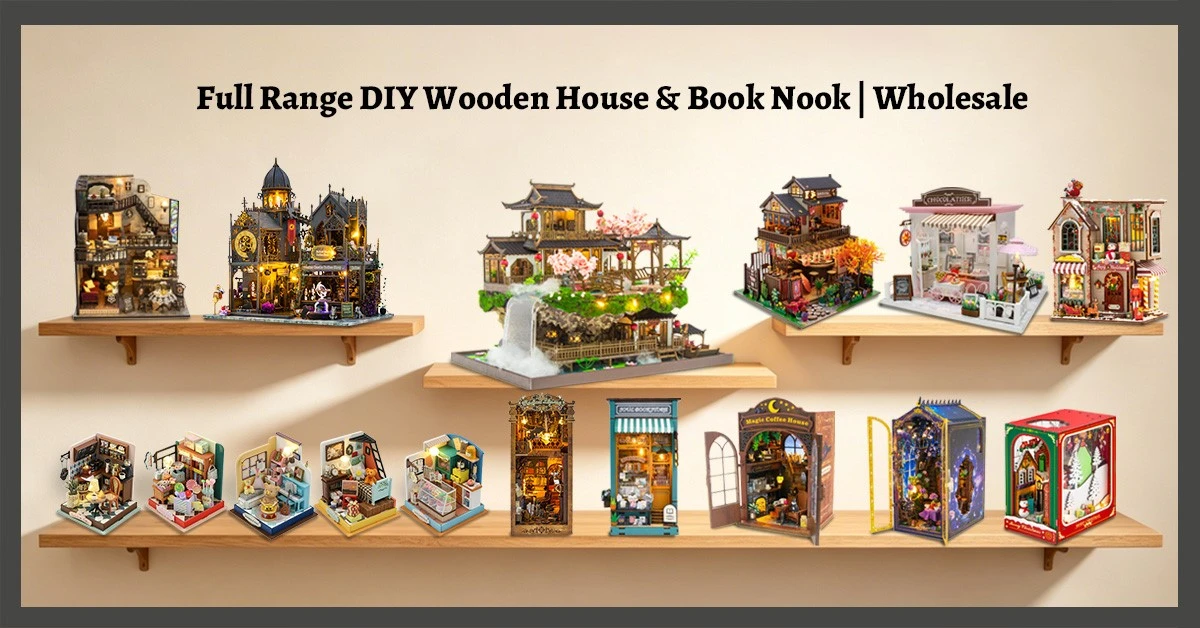
Matching Products to Customer Skill Levels
Not every miniature house kit is suitable for every buyer. These kits generally fall into three categories:
1. Beginner-level kits: These feature pre-cut components and are simple to assemble, typically taking 3–5 hours. They include easy-to-follow, step-by-step instructions and are ideal for first-timers, families, and those purchasing gifts for the holidays.
2. Intermediate-level kits: These include miniature furniture, LED lighting, and more intricate interior details. They are popular among craft enthusiasts who already have some experience.
3. Advanced-level kits: These often feature multi-story designs with highly refined details and require a longer assembly time. They come at a higher price point and are primarily targeted at experienced collectors.
If you are new to this product category, it is recommended to start with beginner-level kits. Once you gain a better understanding of your repeat customers' needs, you can gradually expand your inventory to include intermediate and advanced-level models.
Check Material and Craftsmanship Quality
Material quality is immediately apparent when a buyer opens the box:
- Edges of pre-cut MDF pieces should be clean and require no further trimming; they should also fit together smoothly during assembly.
- Lower-density boards may expand in humid shipping conditions, leading to cracks during assembly.
Check the thickness of the components, the quality of surface finishes, and ensure that small parts are packaged separately to prevent them from getting lost.Before committing to a large order, request sample photos of the wooden boards and pre-cut components from the manufacturer.

Verify Kit Contents
A complete kit helps minimize customer complaints and returns. Ensure the package includes:
- Miniature furniture and decorations
- LED lighting system with a battery box
- Dust cover or display case
- Basic tools (tweezers, glue, and step-by-step instructions)
Having all components present is a key selling point for resellers. Furthermore, clarify the manufacturer's policy on "replacement parts"-the ability to quickly provide free replacements for damaged or missing pieces is essential for maintaining your store's reputation.
Select Themes That Align with Market Demand
- Popular themes include classic cottages, cafés, bookstores, libraries, fantasy settings, and various holiday-themed structures.
- Demand for holiday and Christmas-themed miniatures peaks during the third and fourth quarters; it is advisable to stock up in advance.
- Themed kits perform exceptionally well on social media, as buyers often enjoy sharing photos of their completed projects.
Adopt a balanced product selection strategy: include both best-sellers that drive consistent sales and seasonal items tailored for peak shopping periods.
Evaluating Manufacturer Reliability and Safety
For resale purposes, the stability of the factory is just as important as the product itself:
- If the products are intended for the U.S. or EU markets, ensure they hold the necessary safety certifications, such as CE, ASTM F963, or EN71.
- Assembly instructions should be clear and easy to follow-ideally provided in a bilingual format.
- Verify production lead times, replenishment capabilities, and whether the manufacturer offers private-label (custom packaging) services.
A reliable supplier ensures you have sufficient stock during peak sales seasons, helping you avoid stockouts.

Comparing Prices, Profit Margins, and Minimum Order Quantities (MOQS)
When evaluating different suppliers, always calculate the "total landed cost"-which includes the ex-factory price, packaging costs, and shipping fees-and weigh this against your estimated retail price.
Key points to check include:
- Tiered wholesale pricing and Minimum Order Quantities (MOQs).
- Bulk discounts that align with your projected purchase volume.
- Sufficient room for a reasonable markup within your target market.
Keep in mind that the product with the lowest unit price may not actually be the most cost-effective once you factor in shipping costs and the potential expense of product replacements.
Conclusion
Ensure that the complexity of your products aligns with your target customer base, keep packaging dimensions reasonable, and partner with a factory that supports product replacements and offers private-label (white-label) services.
Ready to build your product line? Get in touch with our factory to receive our wholesale product catalog, the latest minimum order quantity (MOQ) information, and options for customizing private-label dollhouse kits.
