



In the world of puzzles, 3D puzzles are like a three-dimensional magic, breaking the limitations of plane puzzles and allowing scattered parts to bloom with amazing vitality at your fingertips. It is not only a way of leisure and entertainment, but also a wonderful journey that combines observation, creativity and patience.
What is a 3D puzzle?
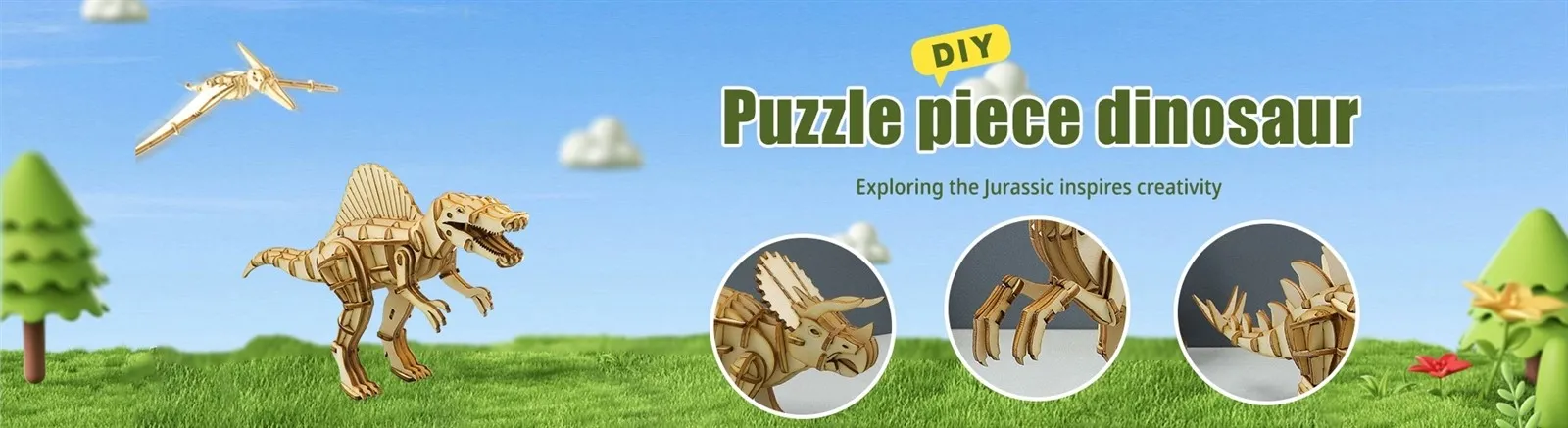
Simply put, it is a model toy with a three-dimensional structure formed by splicing multiple three-dimensional components. Unlike traditional plane puzzles, each piece of a 3D puzzle has a unique arc, interface and angle, and needs to find a precise fit point in three-dimensional space. From magnificent castles, exquisite cars to lifelike animals and complex mechanical structures, the themes of 3D puzzles are all-encompassing and can meet the needs of enthusiasts of different ages and interests. Whether it is a mini model of a few centimeters or a large ornament of tens of centimeters, it embodies the ingenuity of design and the fun of splicing.

The benefits of playing 3D puzzles are far more than the sense of accomplishment after completion.
- First, it can exercise spatial thinking ability. During the splicing process, players need to constantly build the structure of the three-dimensional model in their minds, judge the position, angle and connection method of the parts. This perception and use of three-dimensional space can effectively improve spatial imagination and logical thinking ability, especially for the brain development of teenagers.
- Second, it is an excellent way to cultivate concentration and patience. A complex 3D puzzle often contains hundreds or even thousands of parts. From identifying the parts to finding the correct splicing order, to dealing with subtle interface problems, each step requires a high degree of concentration. When encountering difficulties in splicing, players need to calm down and analyze the problem and try different methods. This process can gradually cultivate a calm mentality and perseverance.
- Furthermore, 3D puzzles can stimulate creativity and aesthetic ability. Some 3D puzzles provide personalized space such as coloring and decoration. Players can add unique colors and details to the model according to their preferences, making the work a unique work of art. At the same time, when observing the overall structure and detailed design of the model, players can subtly improve their perception of proportion, shape and beauty.
- In addition, 3D puzzles are also a bridge to promote parent-child interaction or social cooperation. For children, piecing together large 3D models with their parents can not only enhance parent-child relationships, but also learn how to solve problems under the guidance of their parents; for friends or colleagues, completing a complex 3D puzzle project together can improve communication skills and team cohesion in collaboration, making entertainment more meaningful.

When the last piece is accurately embedded and an originally scattered world is fully presented in your hands, the sense of creation from scratch is indescribable. 3D puzzles are like a key that opens the door to the three-dimensional world, allowing us to grow in the process of piecing together and feel the wonders of the world in three-dimensional models. Whether it is a self-reward in leisure time or a unique gift for others, 3D puzzles are using their three-dimensional magic to add a different kind of excitement to life.
