



Making miniature models is an activity that combines creativity, craftsmanship and patience. In the process, not only can exquisite works be produced, but also multi-dimensional gains can be brought.
Benefits of making miniature models
一,Systematic improvement of skills and abilities
1. Strengthening of manual and fine operation skills
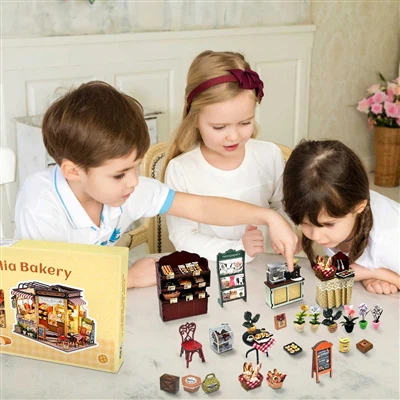
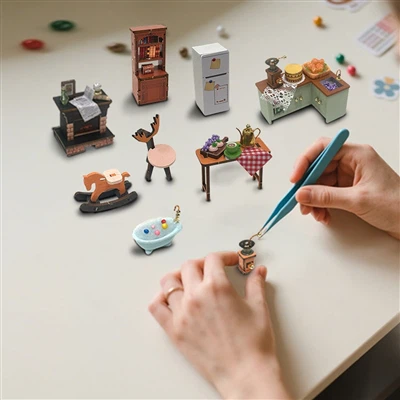
Miniature models often need to handle extremely small parts (for example, the "furniture" and "parts" in the model may be only a few millimeters). From cutting, pasting, coloring to assembly, each step requires precise control of hand movements. Long-term practice can significantly improve hand-eye coordination and sensitivity to details.
2. Cultivation of planning and problem-solving thinking
Before making, the goal needs to be disassembled: for example, to restore a "miniature cafe", it is necessary to first determine the proportion, divide the space (bar/seating area), and design parts (coffee machine/cup); sudden problems are often encountered in the process - such as parts sticking crooked, materials cracking, and color matching. These experiences will make people develop the habit of "planning first and then executing", and learn to be flexible.
3. Deepening of aesthetic and creative expression
Miniature models are not only "restored", but also "re-created". For example, when making a "retro street" model, you need to think about how to use old newspapers to simulate "mottled walls" and use thin iron wire to make "rusty street lights"; you can even add personal creativity - design exclusive signs for miniature stores and match unique costumes for small dolls. This process will make people pay more attention to the aesthetic details in life and express their ideas more confidently in visual language.

二, Positive psychological and emotional feedback
1. Concentration and the acquisition of "flow" experience
When making miniature models, you need to concentrate highly. This kind of concentration can temporarily free people from external pressure and enter the "flow state" - that is, completely immersed in the present and forgetting the passage of time. Studies have shown that this type of immersive activity can effectively relieve anxiety, similar to the effect of "meditation".
2. Cultivation of patience and resilience
A complex model may take weeks or even months to complete: for example, to assemble a miniature castle, you may have to make dozens of "brick and stone" parts first, and then paste, polish, and color them one by one. If a step goes wrong in the process, it is easy to feel frustrated. But after persisting in completing it, you will gradually understand the truth of "slow work and fine work", and your acceptance of "delayed gratification" will also increase - this mentality is also helpful for long-term goals in life and study.
3. Enhancement of sense of accomplishment and self-identity
When a miniature world from nothing is formed in your hands - for example, watching an empty base gradually become a street with "street lights, pedestrians, and fallen leaves", or watching scattered wooden blocks become "miniature drawers that can be opened and closed", you will have a strong sense of accomplishment. This experience of "creating value with your own hands" can directly enhance self-identity, especially suitable for "recharging" when you are under great pressure and self-doubt.

三,Expansion of cognition and perspective
1. Intuitive understanding of "proportion" and "space"
The core of miniature models is "proportional conversion" - for example, in a 1:50 model, 1 cm is equal to 50 cm in reality. Through practice, we can understand the concept of "scale" more intuitively: for example, after making a "miniature room", we will suddenly understand that "a 3-meter-wide living room in reality is only 10 cm in a 1:30 model. It turns out that the sense of space is like this." This cognition is helpful for architecture, design, and even daily storage planning.
2. Attention to "details" and empathy
In order to make the model more realistic, it is necessary to observe the details of real objects: for example, when making "miniature plants", pay attention to the texture and growth angle of the leaves; when making "old object models", imitate the wear marks of objects. This kind of observation will make people pay more attention to the "little things" that are ignored in life - such as the wood grain of the roadside benches and the moss in the corners of the wall, and even begin to understand that "every object has its own story", indirectly enhancing empathy for others and the environment.
3. A bridge connecting interests and social interaction
Miniature model enthusiasts often share their works through communities, which not only allows them to gain recognition from their peers, but also allows them to exchange skills. Making models for favorite themes can also deepen their love for their interests - for example, people who like "Harry Potter" will have a deeper understanding of the scene settings in the original book when making the "Hogwarts Miniature Castle", and may even discover details that they had not noticed before.
四, The added value of the work itself
In addition to the gains in the process, the finished product also has practical significance:
1. It can be used as a unique gift
2. It can be used for scene display
3. It can even become a personal "memory carrier"
Summary
The gains from making miniature models are essentially "growing in creation": it allows people to gain peace in concentration, learn to think in problem solving, and feel the beauty of life in polishing details. Whether as a hobby or a skill, it brings not only a "small world", but also a life attitude of "taking everything seriously".
